
Contents
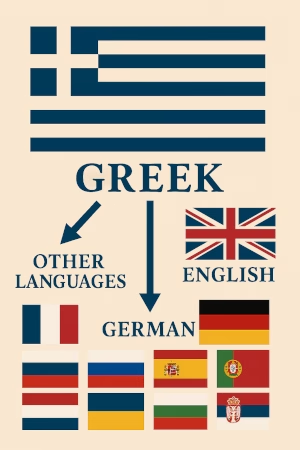
GodGreek didn’t just influence other languages — it helped build them. From medicine and astronomy to politics, philosophy, and modern technology, thousands of terms used every day trace directly back to Greek roots. Words like “biology,” “democracy,” “analysis,” and “technology” aren’t random borrowings; they carry precise meanings shaped thousands of years ago. When you look closely at scientific and academic vocabulary across English, German, French, Italian, and beyond, the Greek structure is still there — clear, systematic, and surprisingly intact. Here I present just a subset of the thousands of terms in those languages.
The Greek alphabet directly influenced the development of the Latin script, and through it shaped most modern European writing systems still in use today. Specifically, the Latin alphabet is an evolution of the ancient Chalkidian alphabet, derived from the Phoenician alphabet, which in turn derived from Egyptian hyeroglyphs.
🌿 Natural Sciences
⚛️ Physics – Matter, energy, motion, forces: from Greek ‘Φυσική / phonetic: ‘Physeké’
⚗️ Chemistry: from Greek ‘Χημεία / phonetic: ‘Chemia’, meaning: Chemistry, Chemie, Chimica
🌌 Astronomy: from Greek ‘Αστρονομία / meaning: The rules governing the stars / phonetic: ‘Astronomia’
🪨 Geology: from Greek ‘Γεωλογία / phonetic: ‘Geologia’
☁️ Meteorology: from Greek ‘Μετεωρολογία / phonetic: ‘Meteorologia’
🌊 Oceanography: from Greek ‘Ωκεανογραφία’ / meaning: ‘Ωκεανος’ = Ocean / phonetic: ‘Okeanographia’
🌱 Life Sciences (Biological Sciences)
🐞 Artrhropod: from Greek ‘Αρθρόποδο’ / meaning = small invertebrate animal with segmented body and jointed limbs, e.g. insect, spider, scorpion, centipede, and millipede on land; crab, crayfish, shrimp, lobster, and barnacle in water, Artrhropod (EN), Gliederfüßer (DE), Arthropode (FR), Artropodo (IT), Artrópodo (ES).
🧬 Biology: from Greek ‘Βιολογία / phonetic: ‘Biología’
🐜 Entomology: from Greek ‘Εντομολογία’ / meaning = pasture, herbs / (phonetic: ‘Entomología’). From Greek ‘έντομον’ (éntomon) = small invertebrate, artrhropod animal with six legs, insect, insectum (direct translation of ‘έντομον’ in latin languages), insect (EN), Insekt (DE), insecte (FR), insetto (IT), insecto (ES) + -logy = study of insects.
🦁 Zoology: from Greek ‘Ζωολογία / phonetic: Zoología’ / meaning: ‘Ζώον’ = animal
🌿 Botany (plants): from Greek ‘βοτάνη’ / meaning = pasture, herbs / phonetic: ‘Votáne’
🦠 Microbiology (microorganisms): from Greek ‘Μικροβιολογία’ / meaning = pasture, herbs / phonetic: ‘Mikroviología’
🧬 Genetics: from Greek ‘Γενετική’ / phonetic: ‘Genetiké’
🌱 Ecology: from Greek ‘Οικολογία’ ‘Οίκος’ = home / (Ecología), Ökologie (DE),
🫀Anatomy: from Greek ‘Ανατομία’ ‘Οίκος’ = home / phonetic: ‘Anatomía’
🫁 Physiology: from Greek ‘Φυσιολογία’ ‘Φύσις’ = nature (phonetic: ‘Physiología’)
🧠 2. Social Sciences
🗿 Anthropology – Human cultures and evolution: from Greek ‘Ανθρωπολογία’ ‘Άνθρωπος’ = man, Mensch, l’homme, hombre, huomo + ‘Λόγος’ (Lógos) = study, discourse / meaning: study of the humans behavior and physiology / (phonetic: ‘Lógos’) -logy. phonetic: ‘Anthropología’, Anthropology (EN), Anthropologie (DE), Anthropologie (FR), Antropologia (IT), Antropología (ES), Антропология (RU).
💰 Economics: from Greek ‘οἶκος’ = household + ‘νόμος’ = law / phonetic: ‘Economía’, meaning: management of the household
🌍 Geography: from Greek ‘Γεωγραφία’ ‘Γέω’ = earth + ‘γραφή’ = to write, meaning studying the Earth / phonetic: ‘graphé’/ phonetic: ‘Geografía’
📜 History: from Greek ‘ἱστορία’ (Istoría) = inquiry, investigation of the past mostly written, meaning: originally meant research or learning through investigation
🏛️ Philosophy: from Greek ‘φίλος’ (philos) = loving person, friend + from Greek: ‘σοφία’ (sophía) = wisdom / meaning: philosophy = the love of wisdom
🏛️ Politics: from Greek ‘Πολιτική’ (Politiké), Greek: ‘πόλις’ (pólis) = city-state, ‘πολιτικός’ (politikós) = relating to citizens / meaning: originally about affairs of the city-state
🧠 Psychology: from Greek ‘Ψυχολογία’ (Psychología) = the study of soul (literally, false and outrageous claim as nobody can find it!!!, from Greek ‘Ψυχή’ (Psyché) = soul Psychology (EN), Psychologie (DE), Psychologie (FR), Psicologia (IT), Psicología (ES), Психология (RU) + from Greek ‘λόγος’ (Lógos) = study, discourse / meaning: study of the mind, used as compound at the end of many names ending in -logy
✝️ Theology: from Greek ‘Θεός’ (Theós) = God, the study of God and Religion, Theology (EN), Theologie (DE), Théologie (FR), Teologia (IT), Teología (ES), Теология (RU).
➗ 3. Formal Sciences
Study abstract systems and logic.
➗ Mathematics: from Greek ‘Μαθηματικά / phonetic: ‘Mathimaticá’
📊 Statistics: from Greek ‘Στατιστική / phonetic: ‘Statistiké’
🧩 Logic: from Greek ‘Λογική / phonetic: ‘Logiké’ = the right mindset, making sense, logic (EN), Logik (DE), Logique (FR), logica (IT), lógica (ES), Логика (RU).
🧾 Theory: from Greek ‘Θεωρία (Theoría) = an idea that needs to be confirmed, causation, Theory (EN), Theorie (FR), Teoria (IT), Teoría (ES), Теория (RU).
📐 Geometry: from Greek ‘Γεωμετρία’, ‘Γέω’ = earth + ‘μέτρον’ = meter, measurement / phonetic ‘métron’ = phonetic: ‘Geometría’
🧪 4. Applied Sciences
Using scientific knowledge for practical purposes.
🔐 Cryptology: Computer science (also cybersecurity and information theory): from Greek ‘Κρύπτω’ = hide, hidden (krypto/crypto) + ‘Λόγος’ (Lógos) = study, discourse / meaning: study of the cryptic / (phonetic: ‘Lógos’) -logy.
🧬 Helix: from Greek ‘ἕλιξ’ = twisted, curved, or spiral, e.g. DNA helix (hélix)
🚁 Helicopter: from Greek ‘ἕλιξ’ (hélix) = twisted, curved, or spiral, e.g. DNA helix + ‘πτέρον’ (ptéron) = wing, flying vehicle with wings working in a helix.
⚙️ Mechanics: from Greek ‘Μηχανική / phonetic: ‘Mechaniké’
💊 Pharmacology: from Greek ‘φάρμακον’ = medicine + ‘λόγος’ (logos) = study of medicines / phonetic: ‘lógos’ -logy. phonetic: ‘Φαρμακολογία’ ‘Pharmakología’
📸 Photography: from Greek ‘φως’ = light / phonetic: ‘phos’ + ‘γραφή’ = to write / phonetic: ‘graphé’ = ‘photografía’
🛰️ Photogrammetry → Geospatial science / surveying / remote sensing: from Greek ‘φως’ (phos) = light / phonetic: ‘phos’ + ‘γραμμα’ = letter (grámma) + ‘μέτρον’ = meter, measurement / (métron).
🔀 5. Interdisciplinary Sciences
Dialect: from Greek ‘Διάλεκτος’ = dialect, local language, lang variety / phonetic: ‘Dyálektos’
🔄 Analog: from Greek ‘Ανάλογος’ (Análogos) = similar, equally computed, symmetrical – also in analogy, nothing to do with sexual innuendos.
👨🏻🚀 Austronaut: from Greek ‘Αστροναύτης’ (Astronáftes) = from Greek ‘Αστρον’ (Ástron) = star, Stern (DE), Stella (IT), estrella (ES) + Greek ‘Ναύτης’ (Náftes) = Sailor (EN), Matrose (DE), Marinaio (IT), Marinero (ES), Матрос (RU).
🪐 Cosmonaut: from Greek ‘Κόσμος’ (Cósmos) = from Greek ‘Κόσμος’ (Ástron) = world, universe, decoration (the sky decorated with lights the way they understood it in antiquity without having invented telescopes, Kosmos (DE), Cosmo (IT), Cosmos (ES) + Greek ‘Ναύτης’ (Náftes) = Sailor (EN), Matrose (DE), Marinaio (IT), Marinero (ES), Космос (RU).
⚙️Auto, Automated: from Greek ‘Αυτόματον’ (Autómaton) = a moving device (vehicle) or a working device (robot) without any human intervention, e.g. auto pilot, Automatic (EN), Automatische (DE), Automatico (IT) + (ES), Автоматический (RU).
🌙 Callisto:
🔤 Dipthong: from Greek ‘Δίφθογγος’ (Dífthong) = two vowels in a single syllable, dipthong (EN), Diphthong (DE), dittongo (IT), diptongo (ES).
Jupiter’s moons:
🌙 Europa/Europe: from Greek ‘Ευρώπη’ (Evrópe) = a Phoenician princess. One view is that her name derives from the Ancient Greek elements εὐρύς (eurús) ‘wide, broad’, and ὤψ (ōps, ὠπός, ōpós) ‘eye, face, countenance’, hence their composite Eurṓpē would mean ‘wide-gazing’ or ‘broad of aspect’, Europe (EN), Europa (DE), Europa (IT), Europa (ES), Европа (RU).
🌙 Ganymede: from Greek ‘Γανυμήδης’ (Ganymédes) = Son of Tros and Kalliroe was considered the most handsome of all humans, for that reason was kidnapped from Zeus/Dias to be his servant (cupbearer) on mount Olympus.
🌙 Io: from Greek ‘Ιώ’ (Ió) = daughter of Inachus in Greek mythology, and lover of Zeus who was turned into a heifer, and about the moon.
🌙 Metis, Adrastea, Amalthea, Thebe, Leda, Himalia, Lysithea, Elara, Ananke, Carme, Pasiphae, and Sinope.
Neptune’s moons:
🌙 Naiad, Thalassa, Despina, Galatea, Larissa, and Proteus
Pluto’s moons:
🌙 Styx, Nix, Kerberos, Hydra, and Charon.
Saturn’s moons:
🌙 Pan, Atlas, Prometheus, Pandora, Epimetheus, and the Titans
⚡Kinetic: from Greek ‘Κίνησις’ (Kínesis) = moving (EN), Bewegung (DE), movimento (IT), movimiento (ES), e.g. kinetic weapon
🪄Myth: from Greek ‘Μύθος’ (Mýthos) = legend (EN), Mythos (DE), mito (IT), mito (ES), e.g. urban myth, mythical = exceeding human standards, mythology (EN), Mythologie (DE), mitologia (IT), mitología (ES) from Greek ‘Μυθολογία’ (Mythología) = the study of legends.
🗣️Logos: from Greek ‘λόγος’ (logos) = study, discourse / meaning: study of the mind, used as compound at the end of many names ending in -logy
🧠 Neuroscience: from Greek ‘Νεύρο’ = neurons, nerves / phonetic: ‘Névro’
⚡ Synapse: from Greek ‘Σύναψη’ = connection, combo / phonetic: ‘Sýnapse’
🧬 6. Medical Sciences
🧫 Pathology:
There’s a lot more. Greek didn’t just donate a few science terms — it basically built the backbone of technical vocabulary.